
BRITISH ASSOCIATION FOR
INTERNATIONAL & COMPARATIVE EDUCATION
Student Benefits
Join us as a BAICE Student Member!
If you become a BAICE Student Member you will receive the same benefits as other BAICE members (see our Membership Benefits page).
In addition, BAICE student members:
- can apply for Student Fieldwork Grants that support UK-based PhD students to undertake overseas fieldwork;
- can apply for the BAICE Student Prizes given for the best papers presented at BAICE/UKFIET conferences and re-written as papers;
- may publish titles of their thesis in Compare and post the abstracts of their research degrees on the BAICE website;and
- have a chance to be elected as the BAICE Student Representatives to serve for two years, or to be part of the supporting student committee.
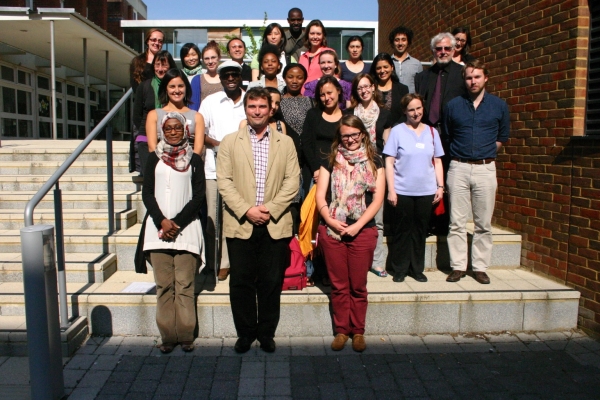
BAICE Student Representatives organise an annual conference to support postgraduate research. The themes of past student conferences include:
- 2017 – Addressing the messiness of data analysis: Praxis, readiness and tips from doctoral research (Institute of Education, London)
- 2016 – Understanding, embracing and reflecting upon the messiness of the fieldwork (Institute of Education, London)
- 2015 – Methodological challenges in comparative and international educational research: Doctoral perspectives (University of Cambridge)
- 2014 – Education and plural societies: Conflict and comparison (Queens University Belfast)
Selected papers from student conferences have been published in Compare as full articles or Forum pieces.
Naveed, A., Sakata, N., Kefallinou, A., Young, S., &Anand, K. (2017). Understanding, embracing and reflecting upon the messiness of doctoral fieldwork. Compare: A Journal of Comparative and International Education, 1-20.
(http://www.tandfonline.com/doi/full/10.1080/03057925.2017.1344031)
(http://www.tandfonline.com/doi/full/10.1080/03057925.2017.1344031)
The student representatives and the student committee organise further events specifically geared to the needs of research students. BAICE student members are invited to suggest proposals for workshops or events to the Student Representatives with the possibility of obtaining funding from BAICE.
Your Student Representatives are responsible for bringing the student voice to the Executive Committee Meetings and organising Student Activities, including conferences and events that are tailored to students’ needs.
Current Student Representatives
-

Pritha Dahal
-

Kate Matzopoulos